
The marbled crayfish was long considered a thermophilic species, but experience with its populations worldwide—and eventually in the Czech Republic as well—soon proved this assumption wrong. Moreover, this crayfish can reproduce without male involvement through parthenogenesis. In practice, this means that the eggs begin to develop on their own after being laid, and that all offspring are genetically identical to the mother. They are clones. Releasing even a single individual is therefore sufficient to establish a new population that can affect many forms of life at a given site. Globally, the marbled crayfish has quickly become a problematic invasive species, and its successful removal from an inhabited locality is possible only under certain conditions. The first prerequisite is early detection, before the population becomes firmly established. Other conditions include, for example, the type of locality (size, the possibility of draining it, the presence of other organisms, etc.), as well as cooperation among all involved parties (experts, nature conservation authorities, fishermen, and others).
A similar situation occurred at a small pond in Prague, where marbled crayfish were discovered in 2020. With the cooperation of experts from three institutions, the nature conservation authority (AOPK ČR), fishermen, and representatives of the local municipality, a pond was harvested with nearly 400 crayfish removed. The pond was then left without water for two months, and the bottom was limed, in case some crayfish had remained hidden from the collectors’ sight. After the pond was refilled, perch were introduced to actively eliminate the remaining crayfish. In October 2021, another harvesting took place with 64 crayfish caught. Approximately half of them were large individuals, often carrying eggs or small juveniles. In addition to crayfish, their burrows were found under large boulders, and casts were made of some of them (up to 40 cm deep). After this harvest, the pond was again left exposed to dryness and frost for two months and was limed once more, this time with lime milk applied even into all visible cavities in the bottom. In September 2022, a single juvenile marbled crayfish was found there. However, in the following years (2023–2025), no crayfish were captured at the site—possibly also thanks to the reintroduced perch.
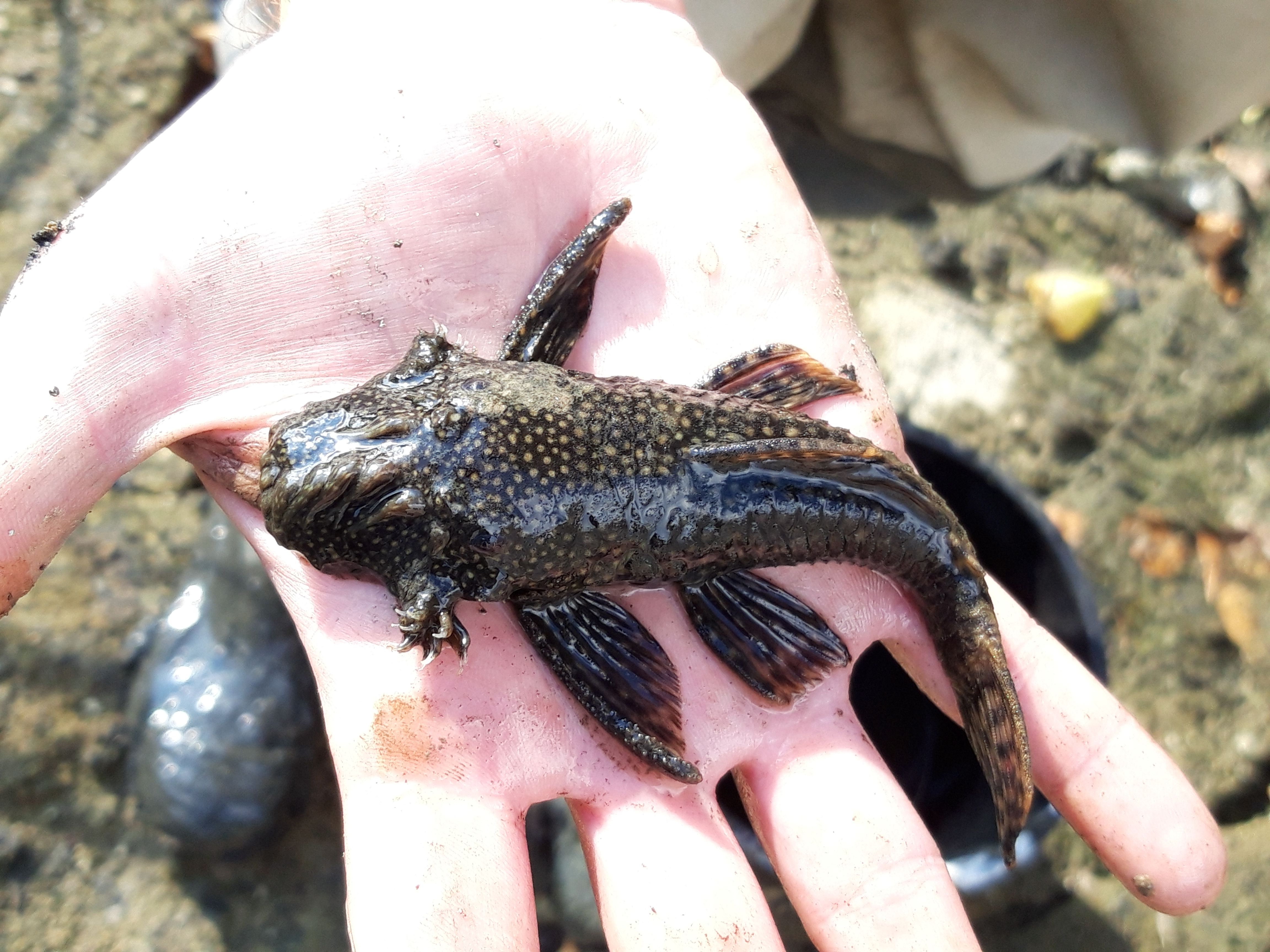
The crayfish likely entered the pond after being released from a home aquarium. Such human activity in the surrounding area is also evidenced by the finding of an aquarium suckermouth catfish (Ancistrus sp.) during one of the harvests. Thanks to the cooperation of all parties involved, a significant reduction (or possibly complete eradication) of the marbled crayfish population was achieved. This will be confirmed after a harvest planned for spring 2026. It is also important that the broader public is educated. This helps prevent releases and enables the implementation of measures to control undesirable species. The results of this work also provide a basis for future activities related to other invasive crayfish, such as the signal crayfish, which often spreads into habitats suitable for our native species. At many sites, their populations are already so massive that only regulation (not elimination) is possible. It is up to everyone how responsibly they approach this issue and whether they refrain from releasing or moving species without proper knowledge. Thoughtless “rescue” of animals can lead to disaster. Moreover, anyone can submit a photograph and leave species identification to experts, thereby enabling rapid detection of new populations.
More detailed information can be found in the original scientific article:
Buřič, M., Ložek, F., Görner, T., Čuprová, V., Kožený, P., Mojžišová, M., Vlach, P., Štruncová, E., Petrusek, A., Kouba, A., Svobodová, J., 2025. Difficult to deal with: attempts for eradication of marbled crayfish from a small urban pond. Management of Biological Invasions 16: 443–464.