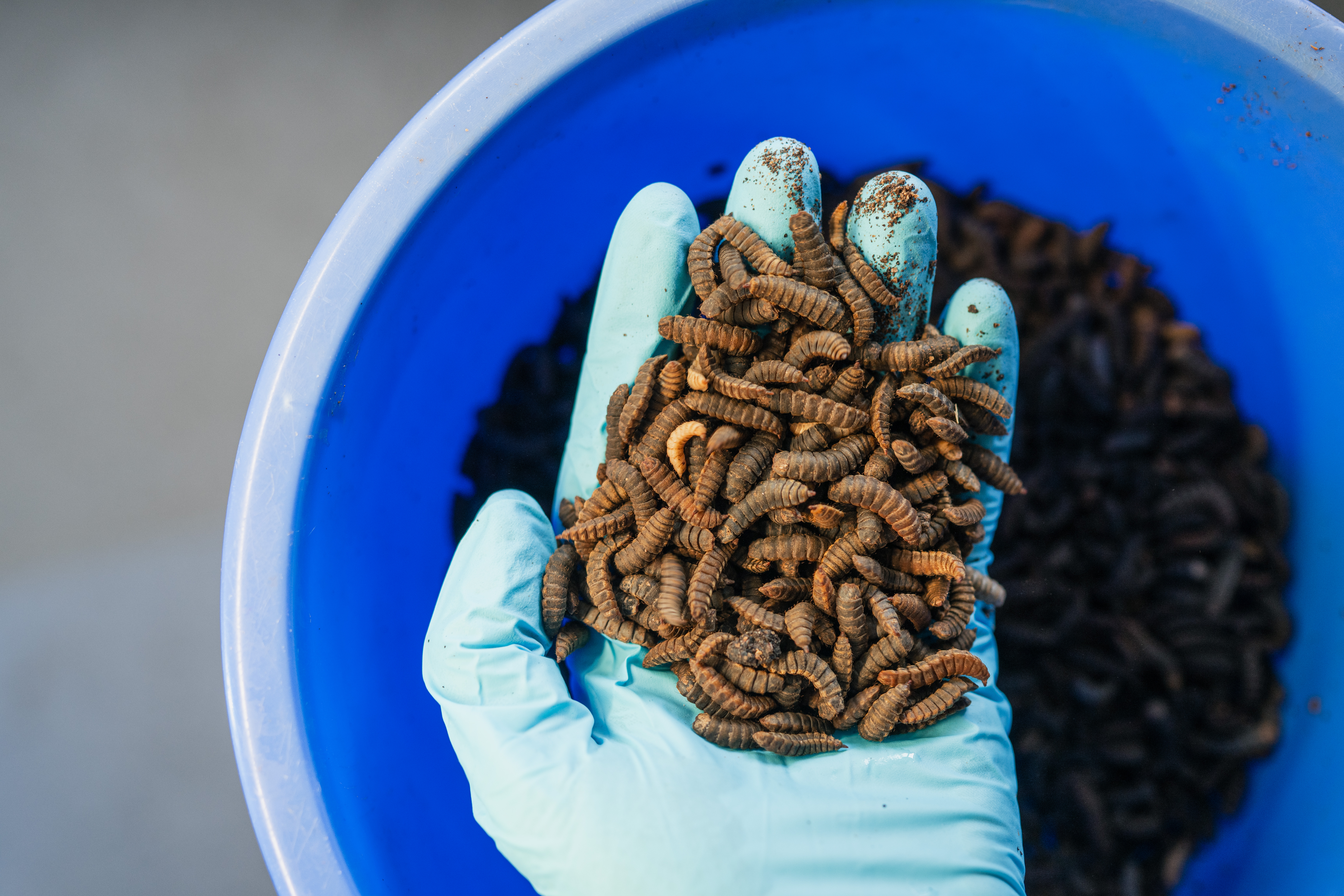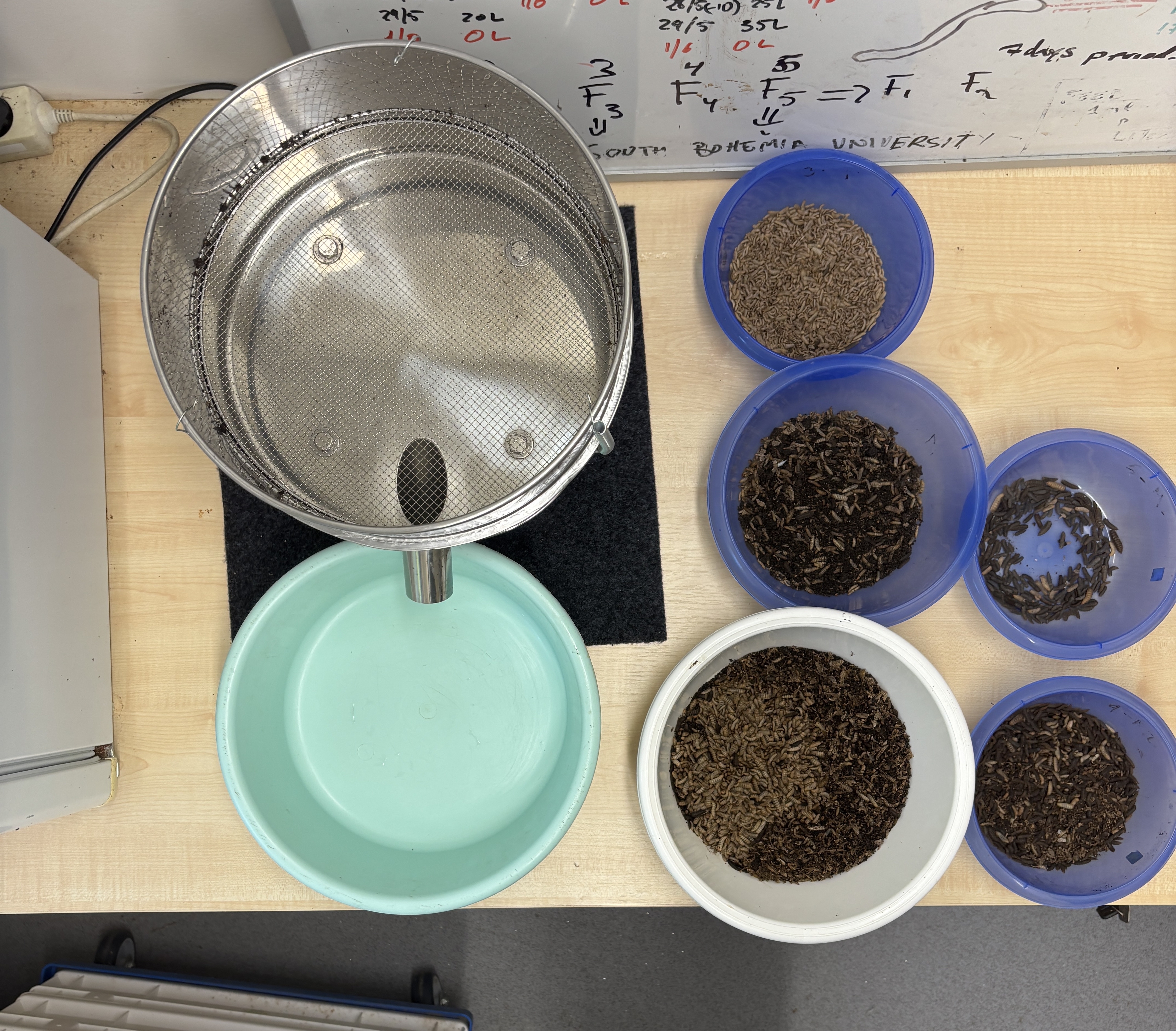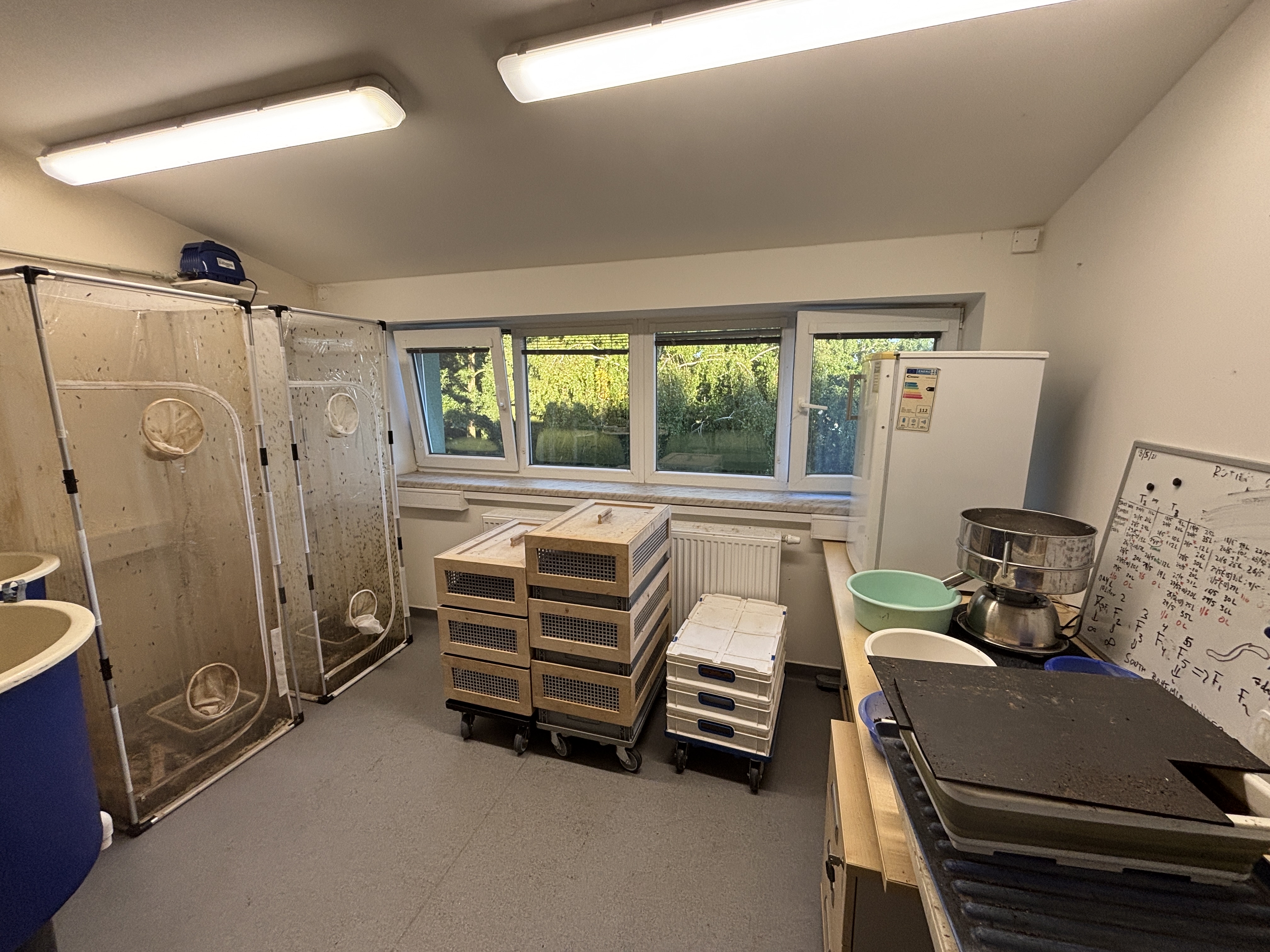

During intensive fish farming practices, large amounts of organic waste are produced, primarily in the form of fish sludge. For a long time, it has been considered just waste to be eliminated and disposed of. Today, it is regarded as an important nutrient source. The use of black soldier fly larvae (Hermetia illucens) has been suggested as an efficient means for converting waste into protein-rich nutrients.
The larvae of the black soldier fly feed on decomposing organic waste and convert it into their own biomass over a few days. The larvae can be dried and converted into insect meal for use as fish food. The meal they provide has high protein and nutrient content and can be used as an alternative to fish meal. It can be easily digested and attracts the attention of various fish species.
This method is based on the principles of a circular economy. Waste from fish farming is converted into insects, insects into feed, and finally, the rest can be used as fertiliser. Consequently, costs are cut, self-sufficiency and sustainability are enhanced, and the ecological footprint of aquaculture is reduced. Thus, black soldier fly larvae can be regarded as a simple yet promising option for more long-term sustainable fish farming.
The full article was published in the February issue of Rybářství magazine, and you can read it here. (Only in Czech)
This project is supported by the student projects of ČSOB, a.s., in cooperation with the Faculty of Fisheries and Protection of Waters of the University of South Bohemia in České Budějovice."