Common carp (Cyprinus carpio) sperm is routinely cooled to 4 °C after collection, even during short-term storage. This procedure is standard practice in hatcheries when sperm is collected in advance of the spawning of females. Although fluctuating fertilization success rates were traditionally attributed mainly to egg quality, it has been shown that the stability of the sperm itself also plays a significant role. Carp sperm is relatively sensitive and shows a marked decline in quality parameters after just a few hours of storage.
This study evaluated different methods of sperm storage during the period between collection and fertilization, aiming to determine whether it is necessary to dilute sperm with artificial seminal plasma and store it in a cooled state when used within 6 hours of collection. Sperm was stored either undiluted or diluted with artificial seminal plasma, and either on ice or at room temperature. The results showed that sperm diluted with artificial seminal plasma better preserves sperm quality, especially when stored on ice. This method also resulted in higher fertilization and subsequent hatching success rates compared to undiluted sperm. The study confirms that the most suitable method is to dilute sperm with artificial seminal plasma in a 1:1 ratio and subsequently store it on ice. For optimal fertilization results, the diluted sperm must be briefly equilibrated to approximately 20 °C before use.
The study clearly demonstrated that carp sperm cannot be reliably stored, even for several hours, without the use of artificial seminal plasma and cooling, as both sperm quality and reproductive potential significantly decline under such conditions.
More detailed information can be found in the original scientific article:
Ma, Z., Zhang, S., Hossain, Md.S., Mahammadi, Y., Alavi, S.M.H., Havlíková, Z., Dzyuba, V., Shazada, N.E., Gela, D., Linhart, O., 2026. Management of common carp (Cyprinus carpio L.) milt storage for breeding programs: The role of extender and temperature. Aquaculture Reports 48: 103602.
Sperma kapra obecného (Cyprinus carpio) se po odběru běžně zchlazuje na 4 °C, a to i při krátkodobém uchování. Tento postup je standardně využíván na líhních v případech, kdy je sperma odebíráno s časovým předstihem před výtěrem jikernaček. Přestože jsou kolísající výsledky oplodnění tradičně přisuzovány především kvalitě jiker, ukazuje se, že významnou roli hraje také stabilita samotného spermatu. Sperma kapra je totiž poměrně citlivé a již po několika hodinách uchování vykazuje výrazné zhoršení kvalitativních parametrů.
Tato studie hodnotila různé způsoby uchování spermatu v období mezi jeho odběrem a oplodněním s cílem zjistit, zda je při použití do 6 hodin po odběru nezbytné sperma ředit umělou semennou plazmou a uchovávat v chladu. Sperma bylo uchováváno buď neředěné, nebo naředěné umělou semennou plazmou, a to na ledu nebo při pokojové teplotě. Výsledky prokázaly, že sperma naředěné umělou semennou plazmou si lépe zachovává kvalitu spermií, zejména při uchování na ledu. Tento způsob vedl rovněž k vyšší úspěšnosti oplodnění a následného líhnutí ve srovnání s neředěným spermatem. Studie potvrzuje, že nejvhodnější metodou je zředění spermatu umělou semennou plazmou v poměru 1 : 1 a jeho následné uchování na ledu. Pro dosažení optimálních výsledků oplodnění je však nutné naředěné sperma před použitím krátce temperovat na teplotu přibližně 20 °C.
Studie jednoznačně prokázala, že sperma kapra nelze bez použití umělé semenné plazmy a zchlazení spolehlivě uchovávat ani po dobu několika hodin, aniž by došlo ke snížení jeho kvality a reprodukčního potenciálu.
Další podrobné informace lze nalézt v původním vědeckém článku:
Ma, Z., Zhang, S., Hossain, Md.S., Mahammadi, Y., Alavi, S.M.H., Havlíková, Z., Dzyuba, V., Shazada, N.E., Gela, D., Linhart, O., 2026. Management of common carp (Cyprinus carpio L.) milt storage for breeding programs: The role of extender and temperature. Aquaculture Reports 48: 103602.
- Fotogalerie:
- Foto:
- Foto:
- Štítky:
FROV
Video from the TNA project
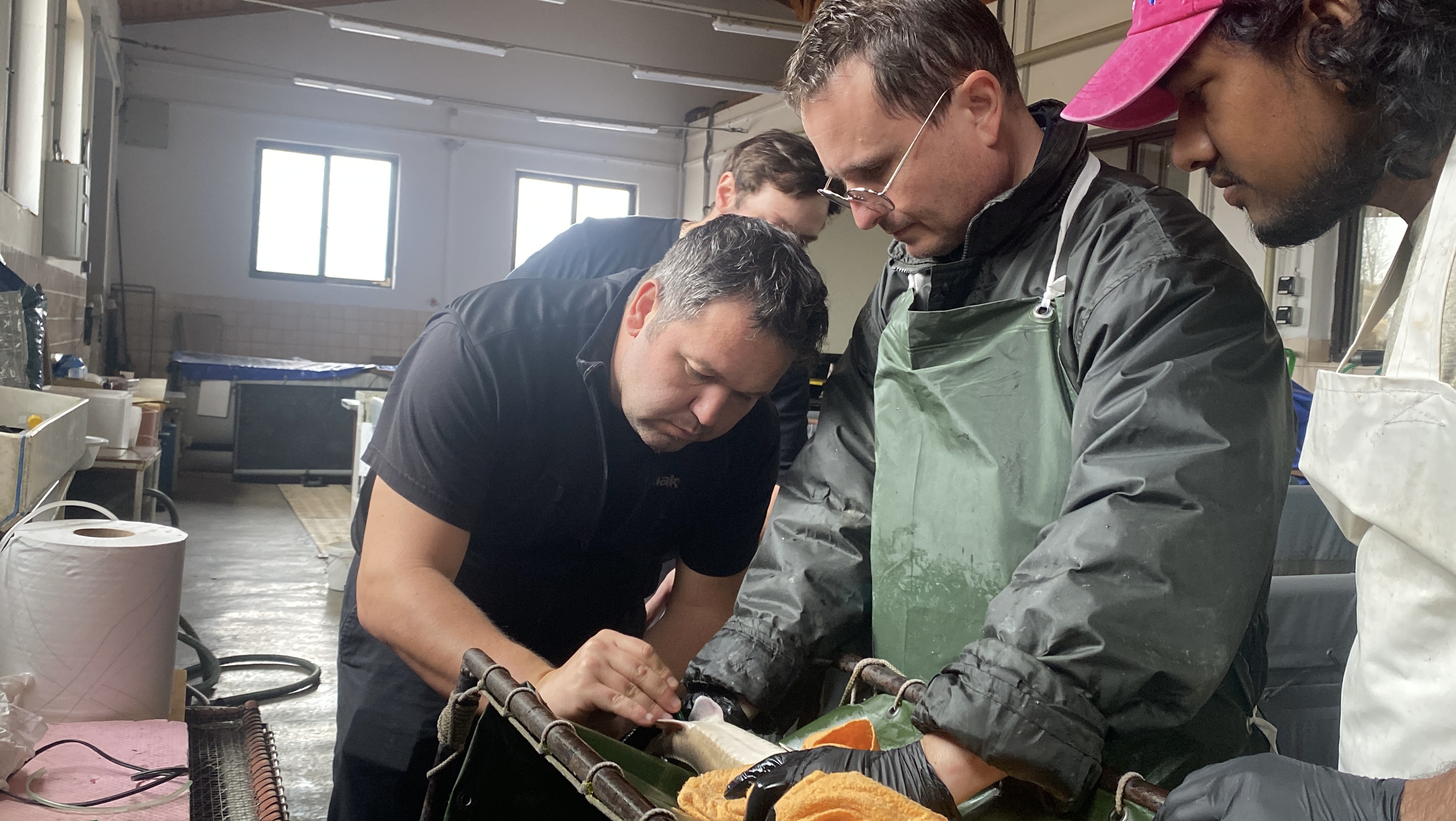
Dr. Atife Tuba BEKEN from the Central Fisheries Research Institute in Trabzon, Türkiye, spent 6 weeks in the Research Institute of Fish Culture and Hydrobiology of the FFPW USB working on the TNA project called „Cryoresistance of sturgeon sperm after hypothermic“ which was carried out as part of the Aquaexcel3.0 project.
Atife together with the RIFCH team led by Dr. Borys Dzyuba worked on sterlet sturgeon (Apicenser ruthenus) reproduction, focusing on improving sperm cryopreservation techniques.
The TNA project aimed to refine sperm cryopreservation practices by determining how long sperm can be stored before freezing without compromising its cryoresistance.
The findings revealed that adding antioxidants to the storage medium helps to maintain sperm cryoresistance, thereby enhancing the potential for the application of sperm cryopreservation in sturgeon conservation programs.
To discover more, watch the short video.
The TNA access was free of charge.The AE3.0 project pays for the experimental costs as well as the travel and subsistence costs.
More information about the AE3.0 project and its TNA program ishere.


This project has received funding from the European Union’s Horizon 2020 research and innovation programme under grant agreement No. 871108 (AQUAEXCEL3.0). This output reflects only the author’s view and the European Commission cannot be held responsible for any use that may be made of the information contained therein.
- Fotogalerie:
- Foto:
- Foto:
- Štítky:
FROV
Dr. Atife Tuba Beken z tureckého Central Fisheries Research Institute v Trabzonu, strávila 6 týdnů ve Výzkumném ústavu rybářském a hydrobiologickém (VÚRH) FROV JU, kde pracovala na TNA projektu s názvem „Cryoresistance of sturgeon sperm after hypothermic“, realizovaném v rámci projektu Aquaexcel3.0.
Atife společně s týmem VÚRH vedeným Dr. Borysem Dzyubou se zaměřili na reprodukci jesetera malého (Acipenser ruthenus) s důrazem na zlepšení technik kryokonzervace spermií.
Cílem projektu TNA bylo optimalizovat postupy kryokonzervace spermií a zjistit, jak dlouho lze spermie skladovat před zmrazením, aniž by došlo ke snížení jejich kryorezistenci.
Výsledky ukázaly, že přidání antioxidantů do skladovacího média pomáhá zachovávat kryorezistenci spermií, což zvyšuje potenciál pro využití kryokonzervace v konzervačních programech jeseterů.
Chcete-li zjistit více, podívejte se na krátké video.
Přístup TNA byl bezplatný. Projekt AE3.0 hradí náklady na experiment a také cestovní a pobytové náklady.
Více informací o projektu AE3.0 a jeho programu TNA jezde.
This project has received funding from the European Union’s Horizon 2020 research and innovation programme under grant agreement No. 871108 (AQUAEXCEL3.0). This output reflects only the author’s view and the European Commission cannot be held responsible for any use that may be made of the information contained therein.